
Mobile Crisis
Behavioral Health Crisis Support that Comes to You
Mobile Crisis
Mobile crisis services provide immediate, in-person support when a mental health or substance use situation feels overwhelming or unstable. Available 24/7/365, the team begins with a call to assess the situation, then comes to your physical location (home, school, work, etc.) to de-escalate the moment, stabilize the situation, and connect you to the next level of care or support if needed.


Services We Provide
- De-escalation and Stabilization
- Crisis Assessment
- Safety Planning and Risk Evaluation
- Coordination with Family, Schools, or Providers
- Connection to Ongoing Care and Resources
- Follow-up and Post-Crisis Support
- Assistance Creating Long-term Treatment Plans
How It Works
Our Mobile Crisis Team visits your location to de-escalate overwhelming situations, bringing calm and support. These well-trained professionals help you regain control and explore the next steps. We serve Warren, Alamance, Caswell, Durham, Orange, and Person counties.

A Trained Dispatcher Assess the Crisis
Call our Mobile Crisis Line at 1-866-275-9552 to connect with a trained dispatcher. Our Dispatch Team is ready to provide immediate triage, support, and coordination of services for all calls.

Transfer to a Mobile Crisis Team Member
A trained member of our Mobile Crisis Team will reach out to you by phone within approximately 15 minutes of dispatch notification to initiate de-escalation and provide immediate support.

Information Gathering and Intake
Our Mobile Crisis Team will verify client information, review consent for treatment, and collect preliminary details to prepare for the crisis assessment.

On-Scene Crisis Response and Assessment
The Mobile Crisis Team performs a thorough on-site assessment to understand the current crisis, identify presenting concerns, evaluate environmental factors and safety risks, and determine immediate support needs.

Development of Safety and Care Plans
The Mobile Crisis Team collaborates with the individual and/or parent or guardian to identify the safest and most appropriate next steps, including referrals, treatment recommendations, safety planning, and community resources.

Post-Crisis Follow-Up and Support
A team member will conduct a follow-up telehealth check-in within 24–48 hours after the crisis response. If further support is needed, a second follow-up may take place within 14 days to ensure ongoing safety, stability, and connection to care.
Eligibility
Freedom House Recovery Center offers mobile crisis services in the North Carolina counties of Alamance, Caswell, Durham, Orange, Person, and Warren.
If you need crisis assistance in another county, please visit North Carolina Crisis Services at North Carolina Crisis Services | NCDHHS
Please seek help if you are experiencing:
- Severe panic attacks that you cannot calm down from
- Thoughts of self-harm or harm to others
- Escalating situations at home with yelling, threats, or violence
- Intense emotional distress and feeling out of control
- Crisis at school as a child or teen
- Unpredictable behavior from a loved one and concerns for safety
Where Does Our Team Serve?
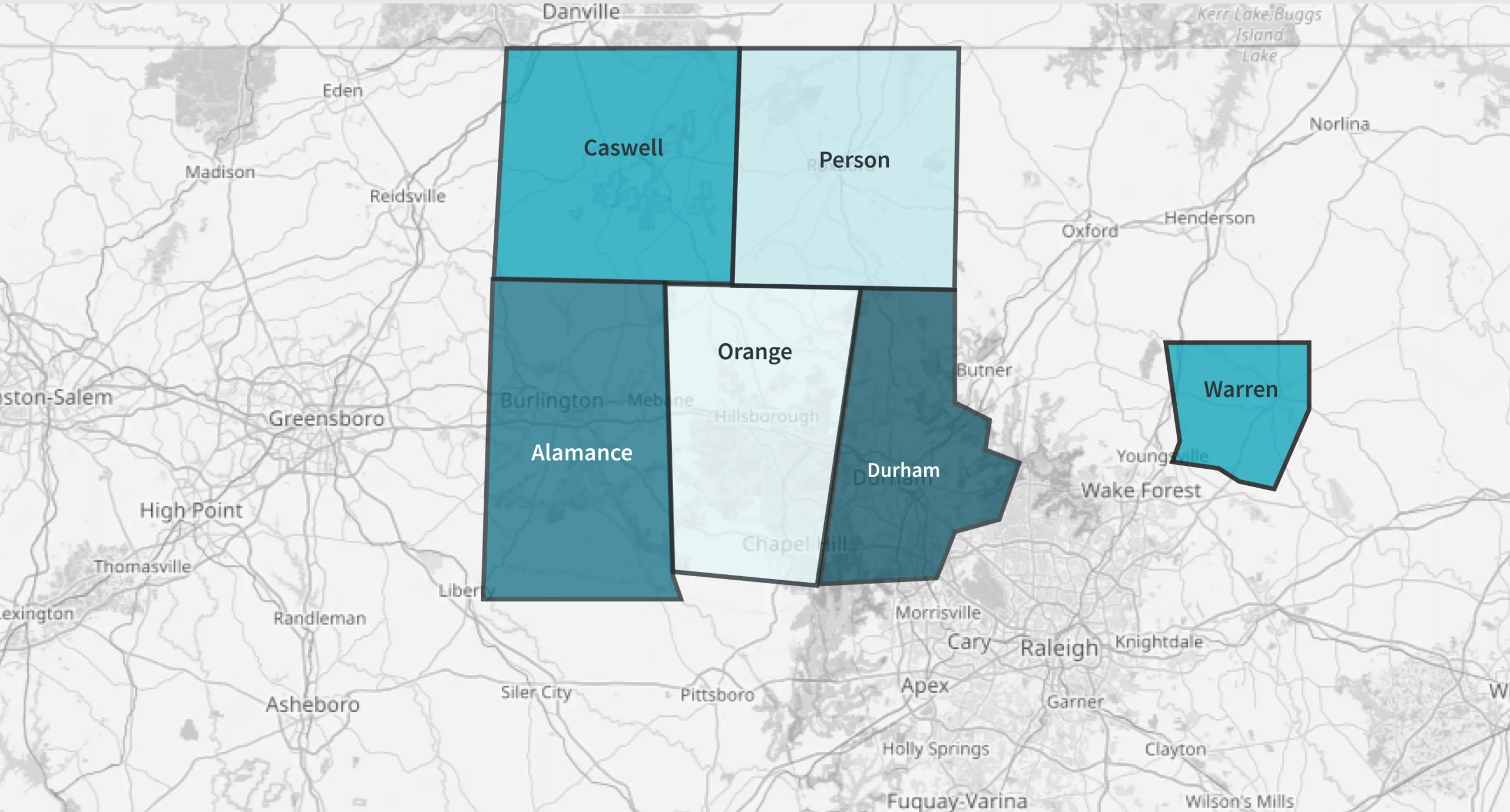
- Warren County
- Alamance County
- Caswell County
- Durham County
- Orange County
- Person County

Facility-Based Crisis vs Mobile Crisis?
The Mobile Crisis Team arrives at your location to de-escalate immediate situations, providing support when emotions run high or circumstances feel overwhelming. In contrast, Facility-Based Crisis offers a longer-term, inpatient environment for individuals needing close monitoring and care, such as during substance withdrawal or mental health crises.
Frequently Asked Questions
How long is the response time?
Telephone triage is immediate. In-person could be up to 2 hours but in most cases in person response is 30–45 minutes.
Can I call if I’m in that county but I don’t live in that county?
Yes, your county of residence does not matter.
Does it cost money?
We accept most insurances. However, our Mobile Crisis Team will respond regardless of your ability to pay.

